Decide fulfillment before you print
Fulfillment feels like the last step, so it tends to get planned last. It should be one of the first. Where your stock will live decides how garments are folded, bagged and labeled. Whether you sell by pre-order or from stock decides when production has to finish and how much cash leaves your account before a single sale. Your size run decides how many units need shelf space. And your packaging and shipping choices decide a per-order cost that comes out of every sale for as long as the product is live.
Three costs matter in this section: your time, the fees per order, and the stock you pay for but cannot sell. Each guide below is about keeping one or more of those under control.
The order to read these guides
- Choose who packs and ships. Merch fulfillment options compares packing orders yourself, a 3PL warehouse, print-on-demand and having your printer store and ship stock, with the fees that hide below a first quote and a checklist for switching.
- Choose how you sell the run. Pre-orders vs in-stock drops sets cash flow, risk, customer wait times and size data side by side, explains the FTC's mail order rule in plain terms, and covers hybrid releases.
- Choose the quantities. How to plan a size run shows how to build a size curve from sales or pre-order data, with worked examples, plus extended sizes, dead stock and reorder points.
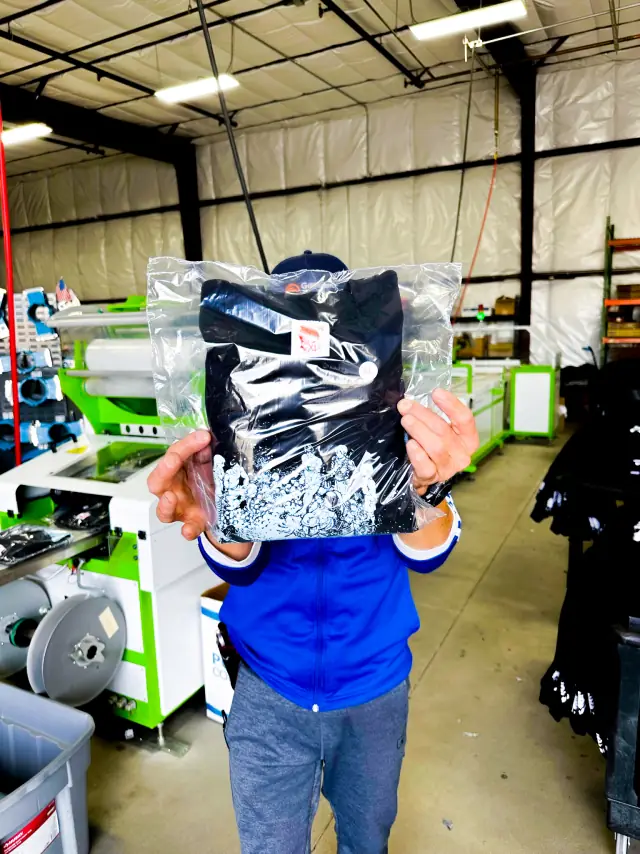
- Choose the packaging. Packaging for apparel orders covers polybags, folds and size stickers, poly mailers versus boxes, inserts that are worth the pack time, and how package size affects postage.
- Price the shipping. Shipping zones explained shows how USPS, UPS and FedEx count zones from your origin, how dimensional weight works, the surcharges on top, the basics of international customs and how to set store shipping rates.
How this fits with the rest of the Library
Fulfillment sits between production and the store. On the production side, the blanks guides explain how styles and colors run out, which matters for reorders, and cut and sew covers the labels and retail packing that make stock shelf-ready. On the store side, e-commerce for merch covers pricing, product pages and launching a drop, and the Shopify guides show how orders are routed to whoever ships them.
If you are starting from zero, read how to start a clothing brand first, then come back here once you know what you are making and roughly how many.