All-Over Print Shirts, Hoodies and Shorts
All-over print covers a garment edge to edge with artwork or a repeating pattern. We do it with cut-panel sublimation: the design is printed onto polyester fabric panels, which are then cut and sewn into hoodies, tees or shorts, so the print runs across the seams and under the arms with no white gaps. It suits bold drops, team kits and patterned basics.
- Quote response24 hours
- MinimumSet in your quote
- ProductionSouthern California
- Ships toUS and worldwide
All-Over Print, done right.
A regular print sits in a box on the front of a shirt. All-over print turns the whole garment into the canvas: a camo pattern that wraps from front to back, a photo that bleeds off the hem, a logo repeat that runs down the sleeves and into the hood. Because the color is dyed into the fabric rather than printed on top, the surface stays smooth and soft, and the print will not crack or peel.
Doing it properly takes more than a big print. Printing a finished garment edge to edge leaves white streaks where the fabric folds at the seams and under the arms. Cut-panel sublimation avoids that by printing the flat fabric pieces first and sewing the garment afterward, which also lets a pattern line up across the seams. The trade-off is fabric: sublimation only works on polyester, and it needs a white or very light base.
From file to finished.
The design starts as artwork laid onto pattern templates, one for every garment piece in every size: front, back, sleeves, hood and pockets. Each panel carries bleed beyond the cut line so the print reaches every edge after sewing. Pattern repeats are tiled across the panels, and focal elements like a logo or a face are placed where they will not disappear into a seam or wrap around the side.
The artwork is printed in mirror image onto transfer paper with sublimation dye ink. The paper is laid on white polyester fabric and pressed at close to 400°F (about 200°C). At that heat the dye turns into a gas and bonds into the polyester fibers, then sets as it cools. The color becomes part of the fiber, which is why a sublimation print has no hand and cannot crack.
Once printed, the panels are cut and sewn into the finished garment. Seams are matched where the design needs it, cuffs, waistbands and drawcords are added, and each piece is inspected for alignment and color. Because the fabric was printed flat, there are no white creases under the arms or along the sides, the usual giveaway of a garment that was printed after it was sewn.
Sublimation dye only bonds with polyester and similar synthetics, so the fabric is a polyester knit or polyester fleece rather than cotton. Polyester is lighter and slicker than cotton and dries fast, which suits athletic shorts and summer tees. There is no white ink in sublimation either: anything white in the design is simply the fabric showing through, and colors print brightest on a white base.
When to choose it, and when not to.
- You want artwork or a pattern that covers the whole garment, including the sleeves and hood.
- The design is a photo, camo, tie-dye effect or pattern repeat that should wrap around the body.
- You need athletic or warm-weather pieces like shorts and tees in light, quick-drying polyester.
- You are building a statement piece for a drop that should look nothing like a standard printed blank.
- The print must have no feel at all and never crack, even across large areas of color.
- You want team or event kits with bold color fields that line up across the seams.
- You want a cotton garment with a heavyweight cotton hand; screen printing or DTG on a cotton blank fits that brief.
- The design is a single logo or chest graphic, where screen printing on a stock blank costs far less and looks the same.
- You need a black garment with white artwork, which sublimation cannot print; plastisol screen printing on a dark blank handles it.
- You need a few pieces quickly; DTG on a stock blank has no minimum and no pattern work.
What we can do
Cut-panel sublimation
Fabric panels are printed flat, then cut and sewn into the garment. It is the cleanest way to get a full wrap: no white creases, no gaps at the seams, and the freedom to line the design up across every panel.
Full garment wrap
One continuous image that flows around the body, front to back and down the sleeves. Placement is planned on the pattern so focal points land on the chest or back rather than in a side seam.
Pattern and textile repeats
A tile that repeats across the fabric, such as a logo monogram, a camo or a custom print. Repeats can be set straight, half-drop or mirrored, and scaled so the motif suits the garment.
Hoodies
Polyester fleece hoodies with the print running through the body, sleeves, hood and pocket. They are lighter and slicker than cotton fleece, usually with a brushed inside for warmth.
Tees
Polyester jersey or performance knit tees printed edge to edge. Light, breathable and quick to dry, with the print fully part of the fabric rather than a layer on it.
Shorts
Athletic and lounge shorts with the pattern running across both legs. A natural match for sublimation, since polyester is already the standard fabric for performance shorts.
What to send
- 01
Design on panel templates
Each size has its own panel shapes, so artwork is laid out on templates for the front, back, sleeves and any hood or pocket, size by size.
- 02
High resolution at full size
Panels are large, so raster art should hold up at full size, typically 150 to 300 dpi at print size. Vector files and tileable pattern tiles scale cleanly.
- 03
Add bleed past every edge
Extend the art well beyond each cut line so trimming and sewing never reveal white fabric at a hem, cuff or seam.
- 04
Keep key elements off the seams
Faces, logos and text should sit clear of side seams, armholes and the hood seam, where a slight shift in sewing shows the most.
- 05
Plan your whites
Sublimation has no white ink. White areas print as bare fabric, so anything meant to read white relies on the white base, and very dark full coverage can look slightly less rich than on screen.
What it suits best
- 01
Polyester fleece hoodies
A polyester body is required for sublimation. It prints bright from edge to edge and keeps the warmth of fleece in a lighter garment.
- 02
Polyester tees
Smooth polyester jersey gives the sharpest detail and brightest color, with a cool, light feel suited to warm weather, events and sport.
- 03
Shorts
Polyester shorts are an easy fit for all-over print, since the fabric is already the norm for athletic and swim-style shorts.
- 04
Cotton-feel polyester
Some polyester knits are finished to feel softer and closer to cotton. They take sublimation well and suit buyers who dislike the slick feel of performance fabric.
- Wash in cold or warm water and skip bleach to keep the polyester bright.
- Tumble dry low; very high heat can leave a shine on polyester.
- Do not iron directly over printed areas; use low heat on the reverse if needed.
One shop, start to finish.
- Produce all-over print by cut-panel sublimation on hoodies, tees and shorts.
- Lay out full garment wraps and pattern repeats across the panels for each size.
- Send a digital mockup of the finished garment for approval before any fabric is printed.
- Print, cut and sew the panels, checking the first pieces before the full run.
- Finish, bag and pack the garments, then ship in bulk or fulfill orders to your customers.
Six steps, nothing skipped.
Minimums and turnaround depend on the method, the garment and the run. The quote spells out both within 24 hours. DTG printing has no minimum, so a run of a few pieces is welcome.
- 01
Quote & discovery
Send the details and artwork. Within 24 hours you get line-item pricing for garments, decoration, finishing and quantities, with a committed timeline.
- 02
Specs & approval
Artwork is reviewed, a spec sheet is issued and a digital mockup is approved before anything runs. Sizes and colorways are confirmed here.
- 03
Sourcing & setup
Blanks are sourced and checked on arrival. Screens are burned or embroidery digitized, files are prepped and a strike-off is run.
- 04
Production
The first pieces are checked and signed off before the full run, with color and registration checks along the way.
- 05
Finishing & packaging
Labels applied, folded, bagged, tagged and packed to spec, then a final QC pass.
- 06
Delivery & fulfillment
Bulk shipped to you, your warehouse or a retailer, or picked, packed and shipped order by order to your customers.
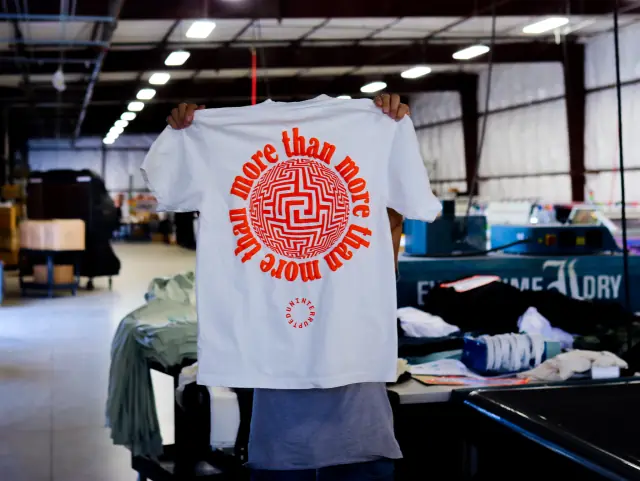
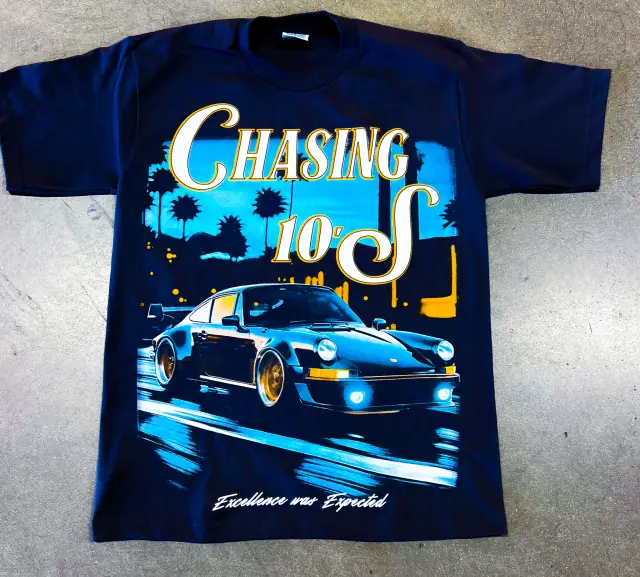
From the production floor
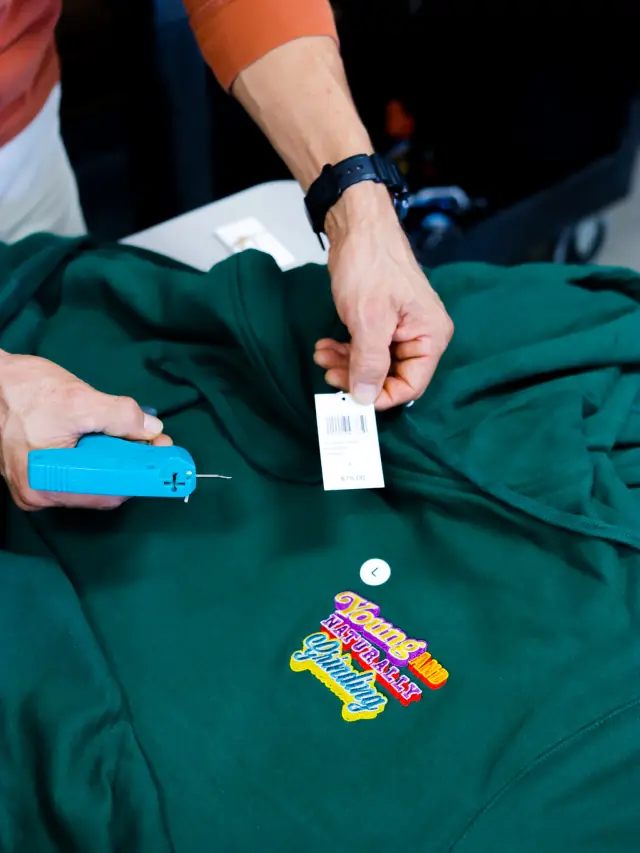
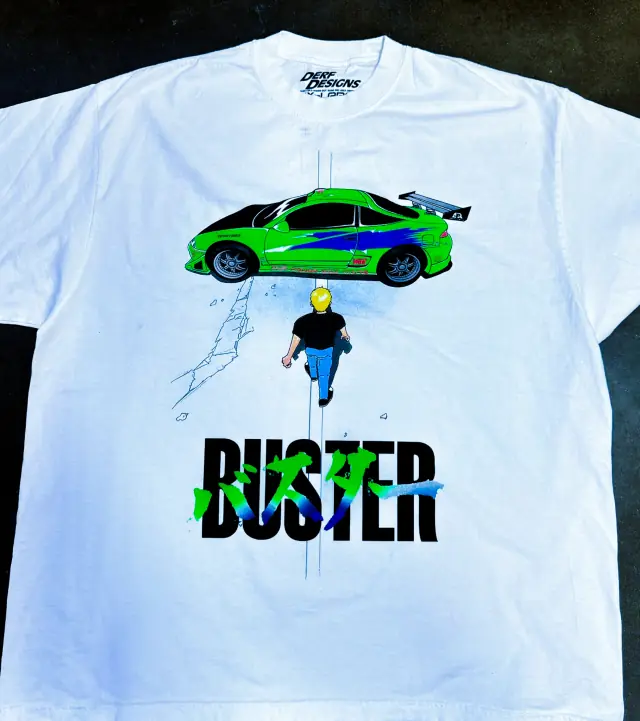
Recent Merch Mob production.
All-Over Print questions
What fabric do all-over print garments use?
Polyester, or fabric with a high polyester content. Sublimation dye bonds with polyester fibers and washes out of cotton, so all-over sublimated garments are made from polyester jersey, performance knit or polyester fleece. If you need a cotton garment with a large print, an oversized screen print on a cotton blank is the alternative.
Will there be white lines at the seams or under the arms?
Not with cut-panel sublimation. The fabric pieces are printed while flat and sewn afterward, so the print reaches every edge. White creases appear when an already-sewn garment is sublimated, because folds at the seams and armpits block the dye, and that is the main reason to print the panels before construction.
Can all-over print be done on a black hoodie?
Sublimation needs a white or light fabric, because the dye is transparent and there is no white ink. A design can still be mostly black, since the dye prints the dark color into the white fabric, but nothing in the art can come out lighter than the base. For white artwork on a black cotton hoodie, screen printing is the right method.
What is the minimum for all-over print?
The quote sets it. All-over print involves pattern work for each size, printing, cutting and sewing, so the minimum depends on the garment, the number of sizes and colorways, and how many unique designs are in the order. Send the art and rough quantities, and the quote comes back within 24 hours with the minimum, line-item pricing and a timeline.
How do I design for all-over print?
Start from panel templates for each size, keep the art at high resolution at full size, extend it past every cut line and keep faces, logos and text away from seams. A repeating pattern is the easiest route, because one well-made tile covers every panel and every size consistently.
How long does all-over print take?
Longer than a standard print run, because the garment is printed, cut and sewn rather than decorated off the shelf. The schedule depends on the garment, the quantity, the number of sizes and how fast the mockup is approved. Your quote includes a committed timeline, so share any launch date up front.
Does sublimation fade or crack?
It cannot crack or peel, because the dye is inside the fibers rather than sitting on top of them. Like any dyed fabric it can fade slowly with long sun exposure, and very hot dryers or irons can dull the surface of polyester. Normal washing barely affects it.
Read before you order
All-Over Print vs Over-the-Seam Printing
All-over print usually means cut-panel sublimation: the design is printed onto polyester fabric panels, which are then cut and sewn, so it runs edge to edge across…
Merch LibraryJumbo and Oversized Screen Prints: Sizes, Platens and Limits
A standard full-front screen print is usually about 10–12 inches wide. Oversized prints run roughly 12–15 inches wide, and jumbo prints go further, often 14–16…
Merch LibraryPrinting on Sleeves, Hoods, Pockets and Zippers
Odd locations print well when the design respects each spot's limits. Short-sleeve prints are typically 2.5–4 inches wide, and long sleeves take a narrow strip down…
Merch LibraryTypes of Shirt Printing Compared: Screen Print, DTG, DTF and More
The main ways to decorate a shirt are screen printing, DTG (direct to garment), DTF (direct to film), sublimation, heat transfer vinyl and embroidery. Screen…
Merch LibraryFabric Guide for Cut and Sew: Jersey, Fleece, French Terry and GSM
Most merch is cut from knits. Jersey makes tees, rib finishes necks and cuffs, interlock and piqué suit heavier tees and polos, and fleece and French terry make…
Merch LibrarySublimation
Let’s build
your next drop.
Tell us what you are making. You get a line-item quote, an honest timeline and production advice within 24 hours.