Knits and wovens
Fabric comes in two families, and they are made, cut and sewn differently.
Knits are built from rows of interlocking loops, usually on circular knitting machines. The loops give stretch and recovery, which is why tees, hoodies, sweatpants, polos and beanies are knits. Knits need stretch-friendly seams: overlock to join panels and coverstitch to hem.
Wovens interlace two sets of yarn at right angles, warp along the length and weft across. They are stable and barely stretch unless spandex is added. Work shirts, coach jackets, chore coats, pants and caps are woven: twill, canvas, poplin, oxford, ripstop and nylon taffeta are common names. Wovens are sewn mostly with lockstitch and need finished seam edges because they fray.
The split matters when choosing a factory. A line set up for knit tees and fleece has different machines and operators from one that sews woven jackets, and many factories do one family well. This guide concentrates on knits, which make up most merch.
The knits you will specify most
| Fabric | Structure | Look and feel | Typical use | Watch for |
|---|---|---|---|---|
| Single jersey | One set of loops; smooth face, looped back | Light, drapey, stretchy across | Tees, lightweight long sleeves | Curling edges, twisting side seams |
| Rib (1x1, 2x2) | Alternating face and back loops in columns | Very stretchy across, springs back | Neck bands, cuffs, hems, fitted tees, beanies | Shade match with body; spandex helps it hold shape |
| Interlock | Two jersey layers knit together | Smooth on both sides, heavier, stable | Heavier tees, baby clothes, polos | Less drape than jersey of the same weight |
| Piqué | Textured knit with a small raised pattern | Breathable, structured | Polos | Texture breaks up fine print detail |
| Fleece | Loopback knit with the back loops brushed | Soft, warm, fuzzy inside | Hoodies, crewnecks, sweatpants | Lint early on, pilling with polyester content |
| French terry | Loopback knit with the back loops left unbrushed | Drier, lighter feel, loops visible inside | Hoodies, shorts, warm-weather sweats | Less warmth than fleece of the same weight |
| Waffle or thermal | Knit in a grid of small pockets | Textured, insulating | Long sleeves, layering | Prints sit on a textured surface |
| Slub jersey | Jersey from yarn with thick and thin spots | Uneven, lived-in texture | Fashion tees | Slubs show through flat prints |
Two jersey details are worth knowing before you talk to a mill. Jersey can be knit tubular, as a tube that becomes a tee body with no side seams, or open width, slit and finished flat, then cut into separate front and back panels. Open-width fabric with side seams gives more control over shape and helps against spirality: the natural twist in circular-knit jersey that pulls side seams toward the front after washing. Ask how the mill stabilizes the fabric and how the factory lays the pattern on the grain.
Fleece and French terry
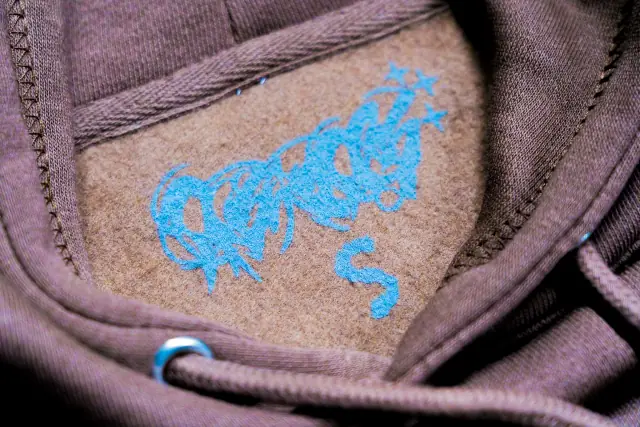
Both start as the same kind of knit: a smooth jersey-like face with extra loops of yarn laid in on the back. For fleece, those back loops are brushed (napped) into a soft, fuzzy layer that traps warm air. For French terry they are left as small loops, which feels drier and lighter against the skin and breathes better.
The face, where prints and embroidery go, looks much the same on both. The differences show up inside: warmth, how the garment feels in a warm climate, lint and pilling, and how the fabric moves. The full side-by-side, including when to choose each, is in French terry vs fleece.
One naming trap: "fleece fabric" also describes polar fleece, a polyester knit that is brushed and sheared, usually on both sides. It is a different product with different sewing and decoration needs. Write "cotton/poly brushed-back fleece" or "100% polyester polar fleece" in a spec, never just "fleece".
Fabric weight: GSM and ounces
Fabric weight is quoted as grams per square meter (GSM) or ounces per square yard. One ounce per square yard is about 33.9 GSM. The mill measures it by cutting a circle of exactly 100 square centimeters with a sample cutter, weighing it in grams and multiplying by 100. The GSM guide covers conversion in detail.
As a rough guide to how the terms are used (mills and brands draw the lines in different places):
| Fabric | Lighter | Midweight | Heavyweight |
|---|---|---|---|
| Jersey for tees | Under about 150 GSM (4.5 oz/yd²) | About 170–205 GSM (5–6 oz/yd²) | About 205–240 GSM (6–7 oz/yd²), with heavier styles above |
| Fleece and French terry | Under about 270 GSM (8 oz/yd²) | About 270–340 GSM (8–10 oz/yd²) | About 340–475 GSM (10–14 oz/yd²) and up |
Three things to pin down in a spec:
- Finished weight. Fabric is lighter or heavier after dyeing, brushing and finishing than in its greige (unfinished) state. Specify the finished weight, after washing if you can.
- A tolerance. Agree how far a bulk roll may vary from the spec before it is rejected.
- Weight is not hand feel. Two fabrics at the same GSM can feel very different because of yarn, loop length, brushing and finishing. Compare washed swatches, not numbers. The weights guide explains how weight changes drape, durability and print surface.
Fibers and blends
- 100% cotton. Soft, breathable, prints beautifully with water-based and discharge inks when reactive dyed. Shrinks more than blends and wrinkles. Yarn type matters: ring-spun and combed yarns give a smoother, finer surface than open-end yarn. See ring-spun vs open-end cotton.
- Cotton/poly blends. CVC (chief value cotton, cotton-majority) blends such as 60/40 and even blends such as 50/50 shrink and wrinkle less and hold shape. Polyester content brings a risk of dye migration under printed inks and more pilling, especially inside brushed fleece.
- Heathers. Blends of differently dyed fibers give a mottled look. Many heathers contain polyester even when the solid colors of the same fabric are all cotton.
- Tri-blend. Polyester, cotton and rayon together make a very soft, drapey, slightly vintage fabric. See tri-blend.
- Spandex. A small amount in rib, written on a label as spandex or by its ISO name elastane, helps necks and cuffs spring back.
- Polyester and recycled polyester. Quick drying and stable; the base for sublimation printing.
- Rayon made from bamboo. Fabric sold as bamboo is usually rayon made from bamboo pulp, and the FTC expects the label and marketing to call it rayon, not just bamboo.
Fiber content must be stated on the garment label using generic fiber names. The private label guide explains how.
Shrinkage and pre-shrinking
Knits shrink because fabric is stretched lengthwise as it travels through knitting, dyeing and finishing, and the yarn relaxes when washed. Cotton knits usually lose more in length than in width. Mills reduce this with mechanical compacting and tumble finishing, which is what "pre-shrunk" means: reduced shrinkage, not none.
Ask for shrinkage results to a named test method, such as AATCC 135 or ISO 5077, so numbers from different mills are comparable. Set a maximum in length and width in your fabric spec. The factory adds the expected shrink to the pattern, so a garment measures to spec after washing, not before.
Anything that washes or dyes the garment after sewing changes the picture. Garment dyeing and enzyme or silicone washes cause extra shrinkage and soften prints, and they need their own allowance and testing. The garment-dyed blanks guide explains why lots vary.
Minimums, dye lots and shade
Mills knit and dye in batches sized to their machines, which is why custom colors come with a minimum quantity per color. A mill's stock colors, or greige fabric it holds ready to dye, usually come with lower minimums than a color developed from scratch. The MOQ and timeline guide covers how this shapes an order.
Every dye batch varies slightly. Ask for all panels of a garment to be cut from the same lot, rib to be dyed alongside the body fabric, and shade bands or lot labels on rolls so a reorder can be matched. Approve lab dips before bulk dyeing and keep a swatch of every approved lot.
How fabric changes decoration
- Cotton faces take water-based and discharge inks well, and discharge needs reactive-dyed cotton. See screen printing inks.
- Polyester content can bleed dye into prints during curing; low-bleed inks and lower cure temperatures help.
- Sublimation needs a polyester fabric in a white or light color, printed before or after sewing. The all-over print guide explains cut-panel printing.
- Heavier fleece takes longer to cure through and holds embroidery and 3D puff well. Lightweight jersey puckers under dense embroidery without good backing.
- Rib and stretch fabrics stretch prints, so thick plastisol can crack when the fabric is pulled.
- Textured knits such as piqué, waffle and slub break up fine lines and halftones.
- Panel decoration lets a print or embroidery sit closer to seams, or cross them once sewn, than a finished garment allows.
What to put in a fabric spec
- Construction: single jersey, 1x1 rib, brushed-back fleece and so on.
- Fiber content and yarn: for example, 100% cotton in a combed, ring-spun yarn, with the yarn count if known.
- Finished weight in GSM with a tolerance.
- Width, and tubular or open width.
- Finish: compacted, enzyme washed, brushed, silicone softened, anti-pill.
- Color: Pantone textile reference, approved lab dip and lot.
- Shrinkage limit in length and width, with the test method.
- Rib or trim fabric, dyed with the body.
- Test reports you need: shrinkage, colorfastness to washing and rubbing, pilling.
Put this in the fabric line of your tech pack and check a length of bulk fabric against it before cutting begins.
Sources
- FTC: Threading Your Way Through the Labeling Requirements Under the Textile and Wool Acts (generic fiber names), checked 2026-10-04
- FTC: How to Avoid Bamboozling Your Customers, checked 2026-10-04
Useful for: clothing brands, creators, skate and surf shops.