Cut and Sew Manufacturer for Clothing Brands
Cut and sew means building a garment from scratch instead of decorating a stock blank: your pattern, your fabric, your fit and your construction. We take a design from a tech pack or reference garment through pattern development, samples and fit approval, with support sourcing the fabric, and then into production. It suits brands that have outgrown blanks or need a silhouette no blank offers.
- Quote response24 hours
- MinimumSet in your quote
- ProductionSouthern California
- Ships toUS and worldwide
Cut & Sew, done right.
Blanks are cut to fit as many people as possible, in the fabrics and colors a mill can sell in volume. Cut and sew is for when that stops being good enough: a boxier body with a dropped shoulder, a heavier fleece in your own colorway, a hoodie with a double-layer hood and no drawcords, shorts with a specific inseam. Every measurement, fabric and seam is your call, so the garment itself becomes part of the brand, not only the print on it.
It is also a bigger commitment than ordering blanks. A custom garment needs a pattern, at least one sample and usually a fit round or two before production, and fabric is bought by the roll with its own minimums. The payoff is a product nobody else can buy wholesale. This page walks through how the process runs, what to prepare, and how cut and sew connects to the decoration and finishing that follow it.
From file to finished.
It starts with a tech pack or a reference: flat sketches, measurements, fabric, trims and construction notes, or a garment you want to start from with the changes marked up. From that, a patternmaker drafts the pattern pieces in your sample size. Pattern development is where fit gets engineered, including body width, shoulder drop, sleeve shape, rise and how the pieces join.
A first sample is cut and sewn from the pattern, ideally in the real fabric or something close to it. You try it on a fit model or measure it against your reference, mark what should change, and the pattern is revised. That loop repeats until the fit is right, and the approved sample becomes the standard the production run is checked against. Bulk cutting does not start until the sample and fit are approved.
Fabric and trims are sourced alongside sampling. We help find fabric by content, weight, hand and color, and suggest alternatives when a target is hard to get; custom-dyed colors usually need lab dips, which add time. Trims like rib, zippers, drawcords, labels and thread are specified at the same stage, because each one has its own lead time.
Once the sample is approved, the pattern is graded into your size range and production begins: fabric is laid out and cut from a marker, the pieces are sewn, and finished garments are inspected against the approved sample. Decoration can go onto cut panels before sewing or onto finished pieces after, and the run can move straight into labeling, packing and fulfillment.
When to choose it, and when not to.
- You need a fit, silhouette or proportion that no stock blank offers in your size range.
- Your brand wants its own fabric, weight or colorway rather than a mill's standard palette.
- The design calls for construction details like panel lines, custom pockets, special hoods or contrast stitching.
- You are building a core product you will reorder for seasons, where a dialed-in pattern pays for itself.
- All-over artwork needs to be printed on the fabric before the garment is sewn.
- You want a garment that exists only under your brand, made to your spec from the first stitch.
- You need a quick first drop to test demand; a decorated, relabeled blank through private label gets there faster.
- The difference you want is mostly the print and the label, which a good premium blank plus retail finishing can deliver.
- The order is small and the budget cannot cover sampling and fabric minimums; start with screen printing or embroidery on blanks.
What we can do
Pattern development
Your design drafted into pattern pieces by a patternmaker, working from a tech pack, sketches or a reference garment. Fit, proportion and construction are set here, and the pattern is graded across your size range once the sample is approved.
Sampling and fit approval
Samples are cut and sewn from the pattern and revised until the fit is right. The approved sample becomes the reference for production, so what you signed off is what the run is checked against.
Fabric sourcing support
Help finding the right fabric by fiber content, weight, knit or weave, hand feel and color, plus a realistic view of what is possible when a target fabric or custom dye is hard to get.
Production run
Cutting, sewing and inspection of the full order against the approved sample, with the first pieces checked and signed off before the rest of the run is made.
Decoration on the same garment
Screen printing, embroidery, DTG and all-over print, applied to cut panels or to the finished garment, so the decoration is planned with the pattern rather than added as an afterthought.
Full private label production
Your neck labels, hang tags and packaging applied as part of production, so the garment leaves ready to sell under your brand instead of waiting for a second finishing step.
What to send
- 01
A tech pack, or the start of one
Flat sketches of the front and back, a measurement chart, fabric and trim callouts and construction notes. A partial tech pack is fine; the gaps can be worked out during pattern development.
- 02
A reference garment
A piece whose fit you like, with notes on what to change, is one of the clearest briefs a patternmaker can get. Mark the changes in inches, not adjectives.
- 03
Size range and key measurements
List the sizes you need and any measurements that must hold across them, such as body length or sleeve length, so grading matches your intent.
- 04
Fabric and color targets
Swatches, fabric names, weights in oz/yd² or GSM, and Pantone references for colors give fabric sourcing a clear target to hit.
- 05
Decoration files and placement
Artwork for prints or embroidery as vector or 300 dpi at print size, with placement marked on the flats so it is built into the pattern from the start.
What it suits best
- 01
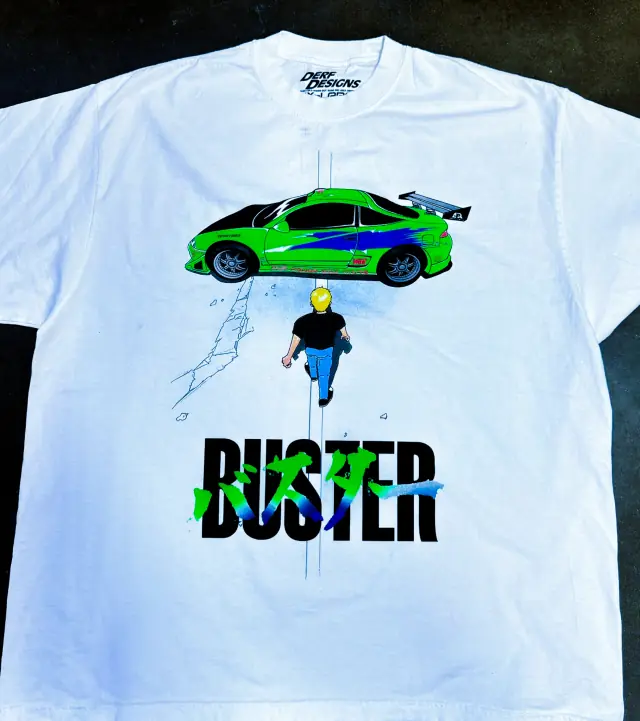
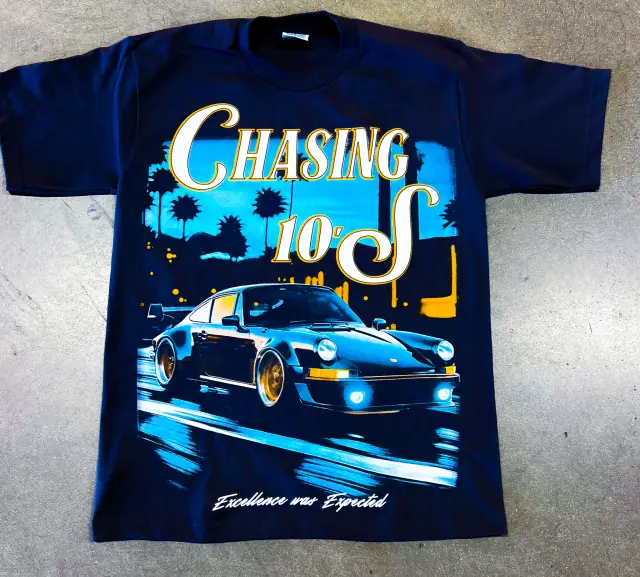
Heavyweight and boxy tees
Custom body widths, dropped shoulders, cropped lengths and heavy jersey that stock blanks rarely combine in a single style.
- 02
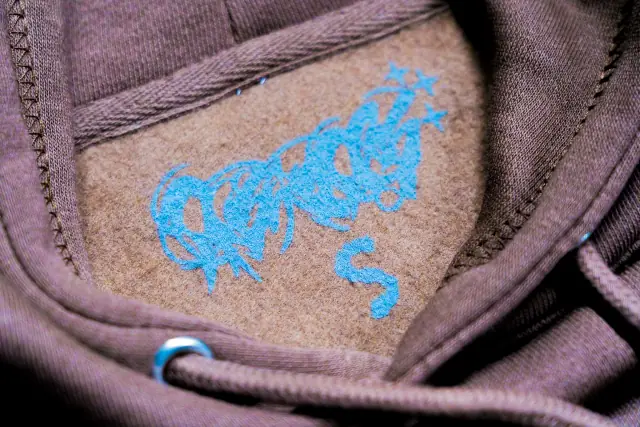
Hoodies and crewnecks
Your choice of fleece or French terry weight, hood construction, pocket shape, rib depth and fit, built around how the piece should hang.
- 03
Shorts
Inseam, rise, waistband, pocket layout and fabric chosen for how the shorts will be worn, from heavy sweat shorts to light athletic pairs.
- 04
All-over print garments
Panels sublimated before sewing, so a pattern or image runs across every seam of a tee, hoodie or pair of shorts.
- Write care instructions for the exact fabric used, since a heavy fleece and a light jersey need different handling.
- Wash new garment-dyed pieces separately at first, because some color can rinse out.
- Dry heavy fleece and French terry flat or on low heat to keep their length and shape.
One shop, start to finish.
- Develop patterns from your tech pack, sketches or reference garment, and grade them across your size range.
- Cut and sew samples and revise them until you approve the sample and the fit.
- Support fabric sourcing, from fiber and weight to color, so samples are made in fabric close to production.
- Produce the full run, checking the first pieces against the approved sample before the rest is made.
- Decorate, label, tag and pack the garments, then ship in bulk or fulfill orders from So Cal.
Six steps, nothing skipped.
Minimums and turnaround depend on the method, the garment and the run. The quote spells out both within 24 hours. DTG printing has no minimum, so a run of a few pieces is welcome.
- 01
Quote & discovery
Send the details and artwork. Within 24 hours you get line-item pricing for garments, decoration, finishing and quantities, with a committed timeline.
- 02
Specs & approval
Artwork is reviewed, a spec sheet is issued and a digital mockup is approved before anything runs. Sizes and colorways are confirmed here.
- 03
Sourcing & setup
Blanks are sourced and checked on arrival. Screens are burned or embroidery digitized, files are prepped and a strike-off is run.
- 04
Production
The first pieces are checked and signed off before the full run, with color and registration checks along the way.
- 05
Finishing & packaging
Labels applied, folded, bagged, tagged and packed to spec, then a final QC pass.
- 06
Delivery & fulfillment
Bulk shipped to you, your warehouse or a retailer, or picked, packed and shipped order by order to your customers.
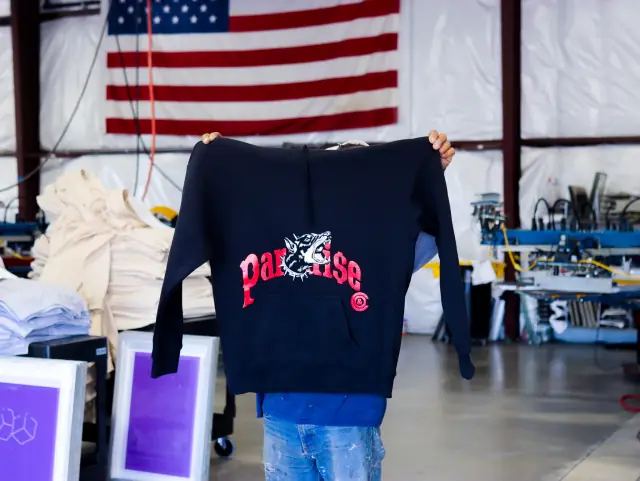
From the production floor
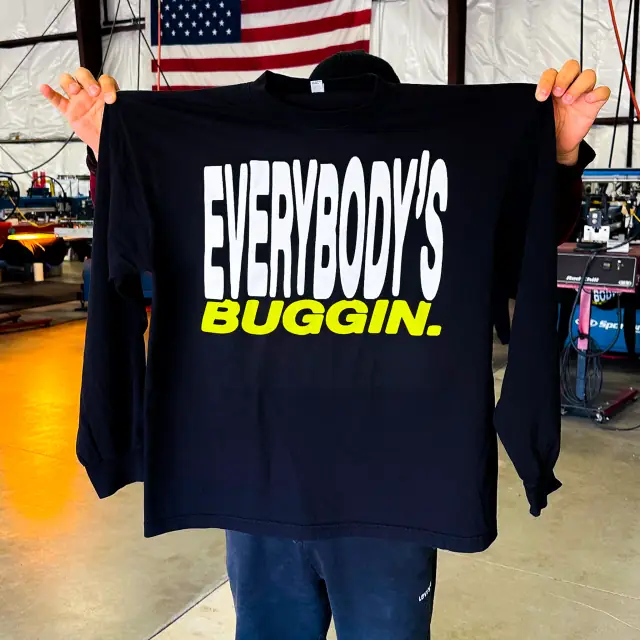
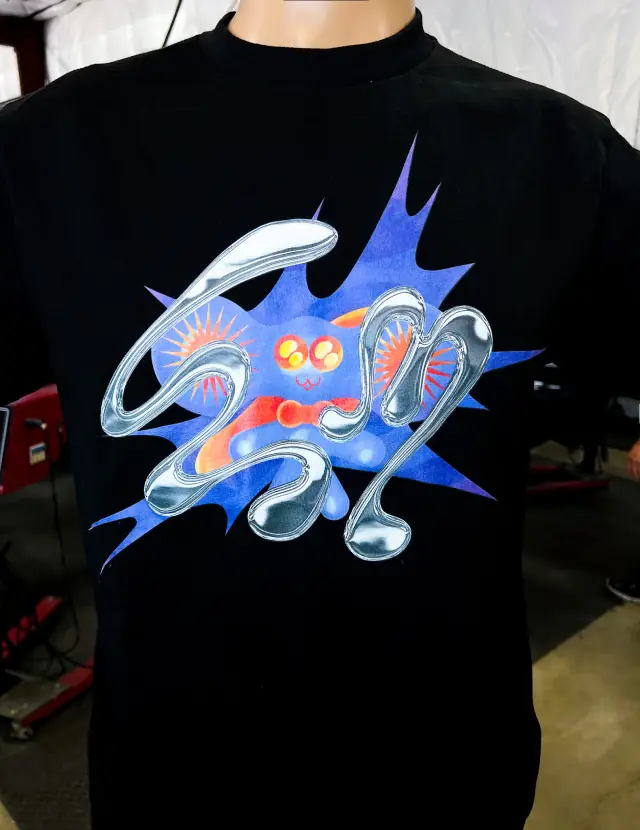
Recent Merch Mob production.
Cut & Sew questions
What is the minimum order for cut and sew?
It depends on the garment, the fabric and the number of colorways. Fabric is usually bought by the roll with mill minimums per color, and every extra colorway or size widens the run, so minimums are set per project. Send your tech pack or reference and the quote states the minimum, line-item pricing and timeline within 24 hours.
Do I need a tech pack to start?
It helps, but you do not need a finished one. Sketches, a measurement chart, or a garment you like with your changes marked up can start pattern development. The more detail you give on fit, fabric and construction up front, the fewer sample rounds it takes to get the garment right.
How many samples will it take?
It varies with how new the garment is and how clear the brief is. A simple tee built from a good reference may need only one round of changes; a hoodie with a new fit and custom details usually needs more. Each round adds time, so build sampling into your launch plan before you announce a drop date.
Can you help source fabric?
Yes. Fabric sourcing support is part of the service: we help find fabric by fiber, weight, knit and color, and flag when a target needs custom dyeing or carries a large minimum. Bring swatches or reference garments if you have them, since a feel is easier to match from a sample than from a description.
What is the difference between cut and sew and private label?
Cut and sew is about the garment itself: a new pattern, fabric and construction made for you. Private label is about making a garment carry your brand, with neck labels, woven labels, hang tags and packaging, whether it started as a blank or as a cut and sew piece. Plenty of brands use both.
How much does cut and sew cost?
The main drivers are fabric, construction complexity, the number of pattern pieces and details, sampling rounds, quantity per style and colorway, and any decoration and finishing. Development work like patterns and samples weighs more heavily on a small run than on a large one. The quote lists each element so you can see where the cost sits.
How long does cut and sew production take?
Longer than decorating blanks, because pattern work, sampling, fit approval and fabric lead times all come before production. The biggest variables are how many sample rounds the fit needs and how long fabric takes to arrive. The quote gives a committed timeline for your project, and working backward from your launch date is the best way to plan.
Read before you order
Blanks vs Cut and Sew: When Custom Is Worth It
Blanks are finished garments made by a mill brand that you decorate in almost any quantity. Cut and sew builds the garment from fabric to your own pattern, so you…
Merch LibraryHow to Make a Tech Pack, Step by Step
A tech pack is the instruction set a factory quotes, samples and produces from. It holds flat drawings of the front, back and details, a bill of materials, a…
Merch LibrarySampling and Fit Rounds: From First Sample to Production
Clothing samples run in stages. A proto checks the idea and construction, fit samples check measurements on a real body, a size set checks the grading, the…
Merch LibraryFabric Guide for Cut and Sew: Jersey, Fleece, French Terry and GSM
Most merch is cut from knits. Jersey makes tees, rib finishes necks and cuffs, interlock and piqué suit heavier tees and polos, and fleece and French terry make…
Merch LibraryMOQs and Timelines in Clothing Production: What Drives Them
Clothing minimums come from the materials and the line: fabric is dyed in batches with a minimum per color, cutting is efficient only with many layers, a sewing line…
Merch LibraryFrench Terry vs Fleece: Which Fabric for Your Hoodies?
Both are knits with a smooth outside and loops on the inside. French terry leaves those loops as they are, so it feels lighter, breathes better and suits mild…
Merch LibraryBoxy, Oversized and Streetwear Fits
A boxy tee is wide and comparatively short, with a straight body. An oversized tee is bigger everywhere: wider, longer, with a lower shoulder and longer sleeves.…
Merch LibraryT-Shirt Size Charts: Why Every Brand Measures Differently
A t-shirt size chart lists garment measurements, usually taken with the shirt laid flat: body width across the chest, body length from the high point of the…
Let’s build
your next drop.
Tell us what you are making. You get a line-item quote, an honest timeline and production advice within 24 hours.