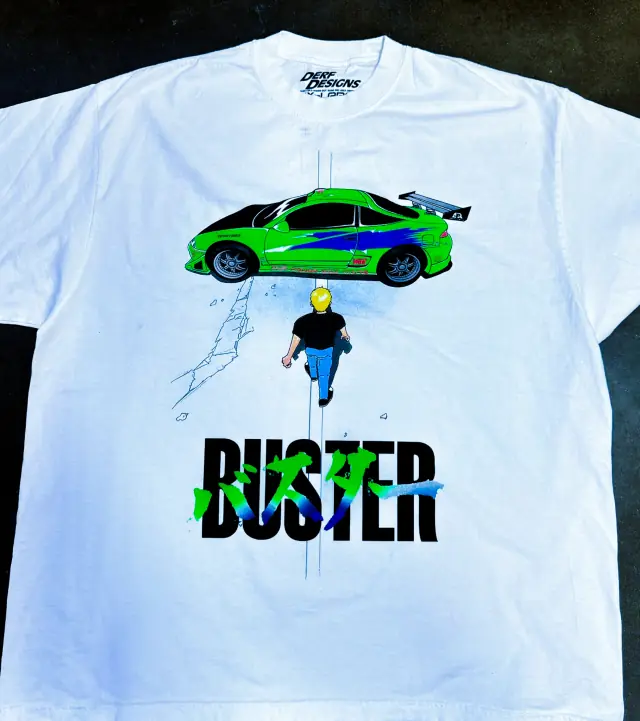
The photo shot list
Shoppers cannot touch the garment, so photos do the touching for them. Plan the shots before the shoot and use the same list for every product, so pages look consistent and nothing gets forgotten.
| Shot | What it answers | Tips |
|---|---|---|
| Front, flat lay or on a ghost mannequin | What the whole design and garment look like | Same background, light and crop for every product |
| Back | Back prints, neck prints, yoke details | Shoot it even when the back is blank, so nobody wonders |
| On model, front and back | How the cut drapes, the length, and print size on a body | Caption with the model's height and the size worn |
| On a second body type | How it looks across the size range | Different heights and builds where you can |
| Print or embroidery close-up | Ink texture, puff height, stitch quality | Side light at a low angle shows texture |
| Fabric and label | Weight, knit, neck label or neck print | Include a fold or cuff so thickness reads |
| Details | Hood lining, drawcords, ribbing, pocket, side embroidery on a cap | One shot per detail that justifies the price |
| Every color | That the color exists and what it really looks like | Photograph each color; do not recolor one photo digitally |
Color accuracy matters more than styling. Shoot in consistent, neutral light, set white balance off a gray card, and compare the edited photo against the real garment on a calibrated screen. A blank described as sand that arrives looking yellow is a return waiting to happen. Garment-dyed pieces vary from batch to batch, so say so if your photos are representative rather than exact; garment-dyed blanks explains why.
Write alt text that describes the product in plain words ("black heavyweight tee with a white two-color chest print"), which helps screen reader users and image search alike.
Fit notes and size charts
A size chart in garment measurements is the single most useful element on an apparel page. Measure finished garments laid flat: chest width about an inch below the armpit, body length from the high point of the shoulder to the hem, and sleeve length. Give inches with centimeters alongside, and state your tolerance, because no two garments in a run measure identically.
Start from the blank maker's published specs, then measure your own production pieces after a wash. Garment dyeing, heat from curing and washing can all change the numbers. T-shirt size charts explains how to read and build a chart, and variants, size charts and inventory in Shopify covers how to display one.
Then say how it fits in words. "Boxy and slightly cropped; size down for a closer fit" does more than a chart for most shoppers. Add the model's height and size, and a comparison shoppers can act on: "Lay a shirt you like flat and compare its chest width to the chart." For cuts that are deliberately large, link the reasoning; boxy, oversized and streetwear fits explains how those cuts are measured.
Fabric facts and the details buyers check
Buyers who care about quality look for the same handful of facts. Put them in a short list under the description:
- Fabric weight in oz/yd² with GSM alongside. See heavyweight vs midweight vs lightweight tees for what the bands mean.
- Fiber content, exactly as the garment's label states it, such as 100% cotton.
- Yarn and knit, for example ring-spun jersey.
- Fit name and whether it is unisex, women's or youth.
- Dye, such as garment-dyed, which explains a washed look and slight variation.
- Decoration method: "screen printed with water-based ink for a soft feel", "puff ink on the chest", "embroidered front, 3D puff". Shoppers read this as a quality signal.
Where the blank is a well-known style, its maker's specs are facts you can state. Avoid empty words like premium unless a fact next to them backs it up.
Care instructions
Repeat the care label, then add advice for the decoration. Common guidance for printed garments is to wash inside out in cold water, tumble dry low or hang dry, and never iron directly on the print. Plastisol prints can soften or tack under a hot iron; embroidery should not be ironed on the stitches; garment-dyed colors soften with washing, which many buyers want. Keep it short and specific to the item, and print the same advice on the insert card in the parcel.
Shipping, returns and the disclosures that apply
Answer the logistics on the page itself, not only in a policy link:
- When it ships: in stock and ships in a stated number of days, or a pre-order with a ship window
- What shipping costs, or the threshold for free shipping
- Returns and exchanges: the window, the condition items must be in, who pays return postage, and whether limited items are final sale
US law adds a requirement for clothing sold online. The FTC's textile labeling guide says that when a textile product is advertised on a website or in a catalog, the description must state clearly whether it was made in USA, imported, or both. If your copy mentions a fiber, the guide says the fiber content from the label must appear too, though the percentages may be left out. This is a plain-English summary, not legal advice; the FTC's guide is listed in the sources, and private label finishing covers what the garment's label itself has to say.
Variants, sold-out sizes and naming
Variants are where small stores lose sales without noticing:
- Show sold-out sizes crossed out rather than hiding them, with a back-in-stock sign-up. Hidden sizes look like you never made them.
- Do not preselect a size. A default selection leads to orders in the wrong size from people who did not look.
- Order options as color first, then size, and photograph every color.
- Use consistent SKUs such as DESIGN-COLOR-SIZE, which keeps fulfillment and reorders clean.
One product with color variants keeps reviews and stock together. Separate products per color give each color its own photos, title and search listing. Pick one approach and use it across the store.
Name products so they can be found and told apart: design name, garment and color, such as "Night Shift Heavyweight Tee, Black".
Write the description in two layers
The first layer is for the shopper deciding whether they want it: one to three sentences on what the design is about, who made it or why it exists. Keep it in your brand's voice and specific to this piece. "Drawn by the band's drummer on the 2024 tour bus" beats "a bold design for any occasion".
The second layer is for the shopper deciding whether it will work for them, and it should be scannable. A pattern that covers most apparel:
- Fit: the cut in words, model height and size worn
- Fabric: weight, fiber content, yarn, dye
- Decoration: method and placement
- Care: the short version
- Origin: made in USA, imported, or both
- Shipping: in stock or pre-order, and when it ships
Keep the order identical on every product, so returning customers know where to look. Search engines read the same text, so the facts that help shoppers also help the page get found for searches like a garment weight or a fabric.
Check the page on a phone
A theme that looks fine in a desktop preview can fall apart in small ways on a phone. Before launch, open each product page on an actual phone and check that the size chart opens without zooming, the variant buttons are large enough to tap, the add-to-cart button stays reachable, photos load quickly on a cellular connection, and the shipping and returns lines are visible without hunting. Ask someone who has never seen the page to pick a size and buy; watch where they hesitate, and fix that first.
Reviews and customer photos
Reviews that mention fit are worth more than star counts. Ask for a review after delivery, not after purchase, and prompt for fit with a simple question: does it run small, true or large. Customer photos show the garment on real bodies in real light, which no studio shot can do.
Keep it clean. The FTC's Consumer Reviews and Testimonials Rule prohibits fake reviews, bars incentives that are conditioned on a positive review, prohibits suppressing negative reviews through threats or false accusations, and requires reviews by staff or family to disclose the relationship. Reply to critical reviews calmly and fix what they point out; a page with a few honest complaints and good answers reads as more trustworthy than a wall of perfect scores.
A product page checklist
- Front, back, on-model, close-up, fabric, detail and every-color photos
- Model height and size worn
- Size chart in garment measurements, inches and centimeters, with tolerance
- Fit described in words, with a comparison tip
- Fabric weight, fiber content, yarn, fit name, dye and decoration method
- Care instructions specific to the decoration
- Made in USA, imported, or both, stated in the description
- Ship timing, shipping cost or threshold, returns and exchanges
- Sold-out sizes visible, no preselected size, back-in-stock sign-up
- Review request scheduled after delivery
When the page is ready, how to launch a clothing drop covers getting people to it.
Sources
- FTC: Threading Your Way Through the Labeling Requirements Under the Textile and Wool Acts, checked 2026-10-04
- FTC: Consumer Reviews and Testimonials Rule, Questions and Answers, checked 2026-10-04
Useful for: clothing brands, creators, bands.